
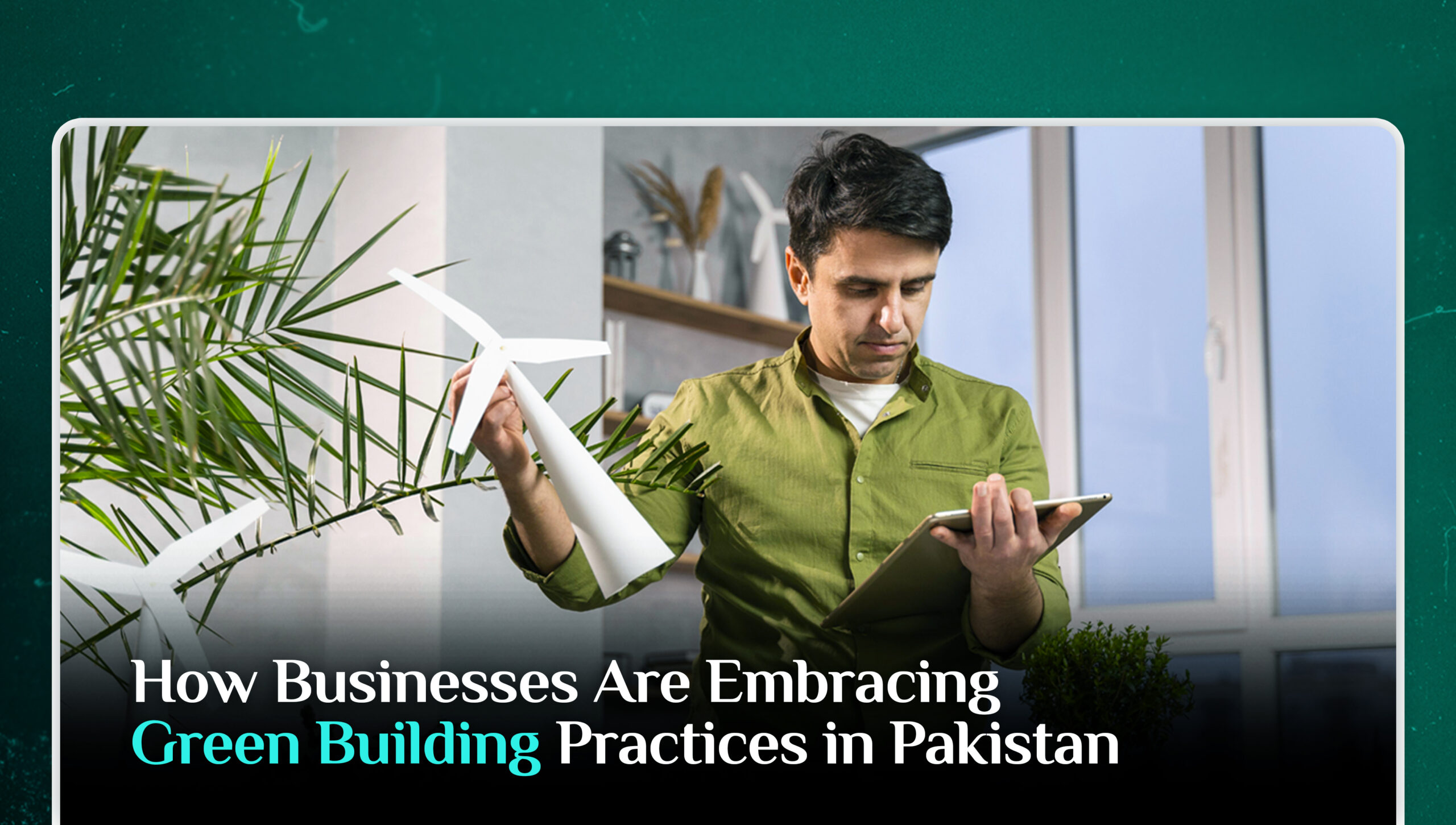
In recent years, the global focus on sustainability has permeated various industries, prompting businesses to reassess their practices and adopt environmentally friendly approaches. Pakistan, with its burgeoning economy and increasing urbanization, has not remained immune to this global shift. One notable trend is the widespread adoption of green building practices by businesses across the country. This blog aims to explore the factors driving this change, the benefits reaped by businesses, and the impact of such practices on Pakistan’s environmental landscape.
Rising Environmental Consciousness
Pakistan, like many other nations, has witnessed a growing awareness of environmental issues among its citizens. Climate change, air pollution, and resource depletion have become pressing concerns, prompting businesses to take proactive measures. This heightened environmental consciousness has played a pivotal role in the adoption of green building practices as companies seek ways to reduce their ecological footprint.
Government Initiatives and Regulations
The Pakistani government has recognized the importance of sustainable development and has implemented various initiatives and regulations to promote green building practices. The introduction of building codes and certifications, such as the Pakistan Green Building Council (PGBC) certification, has incentivized businesses to incorporate eco-friendly elements in their construction and operational processes.
Cost Savings and Long-Term Benefits
Contrary to the misconception that sustainable practices are cost-prohibitive, businesses in Pakistan are realizing the long-term financial benefits of green building. Energy-efficient designs, renewable energy sources, and water conservation measures not only contribute to a healthier environment but also lead to substantial cost savings in the form of reduced utility bills and operational expenses.
Corporate Social Responsibility (CSR)
Many businesses in Pakistan are integrating green building practices into their Corporate Social Responsibility (CSR) initiatives. By aligning their operations with sustainable practices, companies can enhance their corporate image, attract environmentally conscious consumers, and contribute positively to the communities in which they operate.
Technology and Innovation
Advances in technology have provided businesses with innovative solutions to adopt green building practices. From smart building management systems to energy-efficient appliances, technology plays a pivotal role in making sustainable practices more accessible and feasible for businesses of all sizes.
Employee Well-being and Productivity
Green building practices extend beyond environmental benefits; they also contribute to the well-being and productivity of employees. Improved indoor air quality, natural lighting, and ergonomic designs foster a healthier and more conducive work environment, positively impacting employee satisfaction and performance.
Showcasing Leadership and Differentiation
Businesses in Pakistan are increasingly viewing the adoption of green building practices as a way to showcase leadership and differentiate themselves in the market. Customers and investors are becoming more discerning, preferring to engage with companies that demonstrate a commitment to sustainability and responsible business practices.
Challenges
Initial Costs and Return on Investment (ROI)
The upfront costs associated with implementing green building practices can be a significant deterrent for businesses, particularly smaller enterprises. Many businesses in Pakistan may perceive sustainability measures as an additional financial burden without fully understanding the long-term benefits. Convincing stakeholders about the positive ROI over time is a critical challenge.
Limited Awareness and Education
A lack of awareness and understanding about the benefits of green building practices is prevalent among businesses in Pakistan. Educating stakeholders, including business owners, architects, and construction professionals, is crucial for widespread adoption. This requires targeted awareness campaigns, training programs, and knowledge dissemination initiatives.
Resistance to Change
Traditional construction and operational practices often face resistance to change. In a country with established norms and practices, convincing stakeholders to embrace innovative and sustainable approaches can be challenging. Overcoming inertia and fostering a mindset shift towards sustainability require strategic communication and advocacy efforts.
Regulatory Compliance
While government initiatives are encouraging, compliance with new regulations and obtaining certifications can pose challenges. Navigating the evolving landscape of green building codes and standards can be complex, particularly for businesses unfamiliar with sustainable practices. Streamlining regulatory processes and providing support for compliance is essential.
Limited Access to Technology and Expertise
Some businesses, especially smaller ones and those in remote areas, may face challenges in accessing the latest green building technologies and expertise. Creating platforms for knowledge exchange, providing financial incentives, and fostering partnerships can help bridge the technology and expertise gap.
Opportunities
Innovation in Green Technologies
The challenges associated with initial costs and technology access present opportunities for innovation. Research and development in green technologies can lead to cost-effective solutions, making sustainable practices more accessible. Government and private sector collaboration can drive innovation and create a supportive ecosystem for green technology development.
Financial Incentives and Subsidies
Governments, both at the federal and provincial levels, can play a pivotal role in encouraging green building practices by offering financial incentives and subsidies. Tax breaks, grants, and low-interest loans for businesses adopting sustainable measures can significantly offset initial costs, making it an attractive proposition.
Public-Private Partnerships
Collaborations between the public and private sectors can address multiple challenges simultaneously. Governments can provide policy support, while businesses bring innovation and implementation capabilities. Public-private partnerships can accelerate the adoption of green building practices, fostering a holistic and sustainable development approach.
Capacity Building and Training Programs
Addressing the lack of awareness and resistance to change can be achieved through comprehensive capacity-building programs. Educational institutions, industry associations, and government bodies can collaborate to develop training programs for professionals involved in construction and business operations.
Market Differentiation and Brand Reputation
Businesses that proactively embrace green building practices gain a unique selling proposition. Positioning sustainability as a core value enhances brand reputation and attracts environmentally conscious consumers. Companies can leverage their commitment to sustainability for marketing and building long-term customer loyalty.
International Collaboration
Pakistan can tap into global expertise and best practices by fostering international collaborations. Partnerships with organizations, research institutions, and businesses from countries with advanced green building practices can accelerate knowledge transfer and provide valuable insights for local implementation.
Community Engagement and Social Impact
Green building practices can create positive social impacts by improving community well-being. Businesses can seize the opportunity to engage with local communities, addressing their needs and contributing to sustainable development. This community-centric approach not only fosters goodwill but also aligns with the principles of corporate social responsibility.
Conclusion
As businesses in Pakistan continue to embrace green building practices, the country is witnessing a positive transformation in its built environment. From reducing environmental impact to reaping financial benefits, the adoption of sustainable practices is a win-win for businesses and the planet. With the right policies, incentives, and collaborative efforts, Pakistan is poised to create a more sustainable and resilient business landscape for future generations. As the nation moves forward, the integration of green building practices will likely become not just a choice but a necessity for businesses aiming to thrive in a rapidly changing global scenario.
This article is written by Radma Nouman. Radma is a research analyst at the Iqbal Institute of Policy Studies (IIPS).

Leave a Reply