
Pakistan stands at a critical juncture in its journey towards socio-economic development. As the fifth most populous country globally, Pakistan possesses immense potential, particularly within its labor force. However, realizing this potential necessitates a concerted effort to cultivate a skilled, motivated, and inclusive workforce. With a vision set for 2047, Pakistan’s trajectory towards becoming an upper-middle-income country hinges significantly on the efficacy of its strategies to address employment challenges and foster economic growth. Let’s delve into key initiatives and priorities crucial for shaping Pakistan’s labor landscape in alignment with its vision.
 Promote Job Creation for Youth and Vulnerable Groups
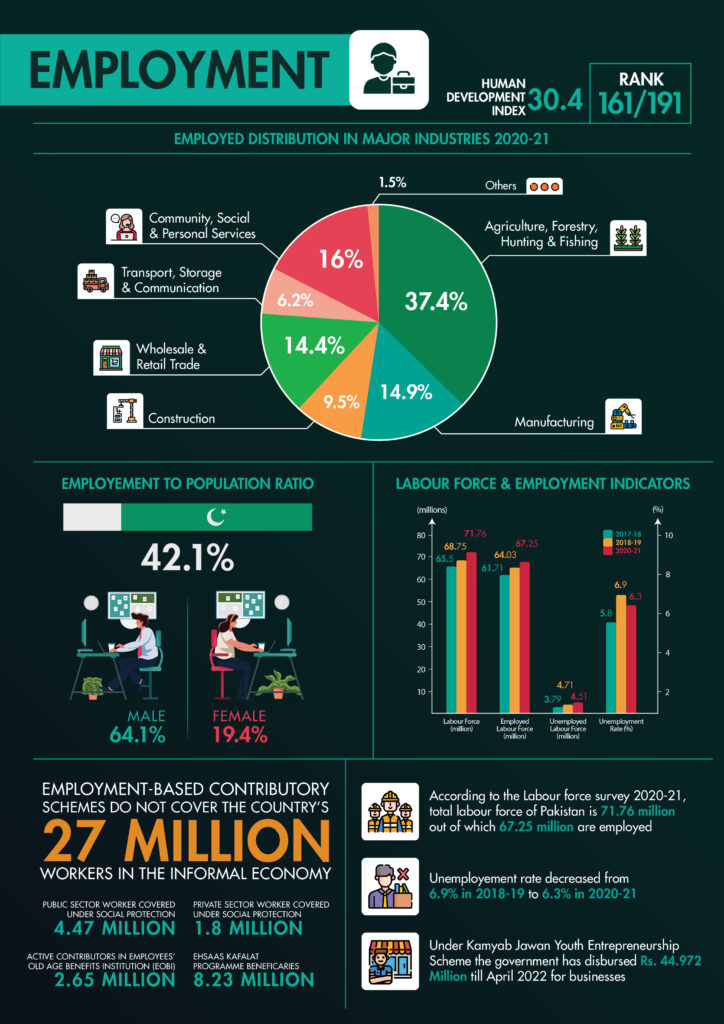
The demographic makeup of Pakistan underscores the urgency of addressing youth unemployment and creating decent work opportunities, particularly in rural areas. With over 50% of the population aged between 15 and 29, targeted efforts are imperative to equip the youth with employable skills and foster entrepreneurship. Initiatives aimed at promoting decent work in rural economies are essential, considering the projected growth of the labor force.
Formalise the Informal Economy
Acknowledging the significant contribution of the informal economy to Pakistan’s GDP, formalizing this sector is paramount for sustainable growth and poverty reduction. Strengthening workers’ organizations and enhancing employers’ capacities are vital steps towards harmonizing industrial relations and ensuring workers’ rights. Transitioning workers and economic units from informality to formality must be accompanied by income security measures and improved working conditions.
Eliminate the Worst Forms of Child and Bonded Labour Progressively in The Rural Economy
In line with Pakistan’s vision, eradicating child and bonded labor is a moral imperative and a crucial step toward fostering a just and equitable society. Multifaceted approaches involving research, advocacy, and targeted interventions are essential to address these deeply entrenched issues. Technical assistance, policy mainstreaming, and community empowerment play pivotal roles in achieving sustainable progress in this area.
Create Employment Opportunities for Vulnerable Categories of Workers
Tailored job creation strategies must cater to the specific needs of vulnerable groups, including women, persons with disabilities, and displaced individuals. Leveraging initiatives such as the China-Pakistan Economic Corridor (CPEC) can unlock new economic opportunities and promote inclusive growth. Strengthening labor market information systems and enhancing the capacity of relevant stakeholders are essential for effective implementation.
Develop Skills, Employment, and Enterprise Development Programs
Skill development lies at the heart of Pakistan’s quest for a capable workforce. Targeted interventions in Technical and Vocational Education and Training (TVET), particularly in agriculture, can enhance productivity and create employment opportunities, especially for women. Gender-responsive approaches, coupled with workplace policies promoting equality, are instrumental in fostering a conducive environment for skills development and entrepreneurship.
Workers Protected from Unacceptable Forms of Work
Ensuring occupational safety and health (OSH) standards is paramount for safeguarding workers’ well-being and productivity. Strengthening legislative frameworks, enhancing inspection mechanisms, and promoting a culture of prevention are essential components of an effective OSH regime. Collaborative efforts among stakeholders, including government agencies, employers, and workers’ organizations, are imperative for achieving lasting improvements in workplace safety.
Extending Social Protection Floors
Expanding social protection coverage, particularly to vulnerable groups in the informal sector, is essential for mitigating the adverse impacts of economic shocks and promoting social inclusion. A comprehensive approach involving inter-ministerial coordination, capacity building, and strategic resource allocation is critical for the effective implementation of social protection schemes. Leveraging existing institutional capacities and fostering dialogue among stakeholders can enhance the efficiency and reach of social protection measures.
Encouraging Participation in the Labour Market
Addressing structural unemployment requires a multifaceted approach encompassing education reform, skills development, and targeted job market interventions. Improving access to education and training, particularly in rural areas, is essential for enhancing the employability of youth and marginalized groups. Policy measures promoting work-life balance, non-discrimination, and social dialogue are integral to fostering a more inclusive and dynamic labor market.
Implement Inclusive Policies to Enhance Participation of Female, Young, and Elderly Population
Closing gender and age-based disparities in labor force participation requires targeted policies aimed at removing barriers and promoting equal opportunities. Initiatives such as internship programs, flexible work arrangements, and financial incentives can facilitate the integration of women, youth, and elderly individuals into the labor market. Legislative reforms and awareness campaigns are crucial for challenging discriminatory practices and fostering a more inclusive work environment.
Devise Policies to Narrow Down the Gap between Participation in the Labour Market in Urban and Rural Areas
Reducing the urban-rural divide in labor market participation necessitates tailored interventions addressing the specific needs and challenges of rural communities. Investing in rural education, improving access to employment services, and promoting entrepreneurship can stimulate economic activity and reduce dependency on urban centers. Strengthening public employment services and enhancing data collection mechanisms are vital for monitoring progress and informing policy decisions.
Activate the Potential of Vulnerable Groups in the Labor Market
Empowering vulnerable groups through targeted training programs, legislative reforms, and awareness campaigns can unlock their untapped potential and facilitate their integration into the labor market. Community-based rehabilitation initiatives, vocational training, and affirmative action measures can provide pathways to economic empowerment and social inclusion. Collaboration among government agencies, civil society organizations, and employers is essential for creating an enabling environment for vulnerable individuals to thrive.
Ensure a Safe and Healthy Workplace
Creating a safe and healthy workplace requires concerted efforts to enforce OSH standards, promote risk awareness, and provide adequate training and support to employers and workers. Strengthening inspection mechanisms, enhancing OSH management systems, and fostering a culture of prevention are essential for reducing occupational hazards and improving productivity. Collaboration among stakeholders, including government agencies, employers, and workers’ organizations, is critical for sustaining progress in workplace safety.
Conclusion
In conclusion, building a capable and motivated workforce is indispensable for realizing Pakistan’s Vision 2047. By prioritizing job creation, skills development, social protection, and inclusive policies, Pakistan can unlock its full potential and pave the way for sustainable economic growth and social progress. Stakeholders across sectors must collaborate effectively and commit to implementing targeted interventions that address the diverse needs and aspirations of Pakistan’s labor force. Only through collective action and unwavering dedication can Pakistan achieve its vision of a prosperous and inclusive society by 2047.

Leave a Reply