
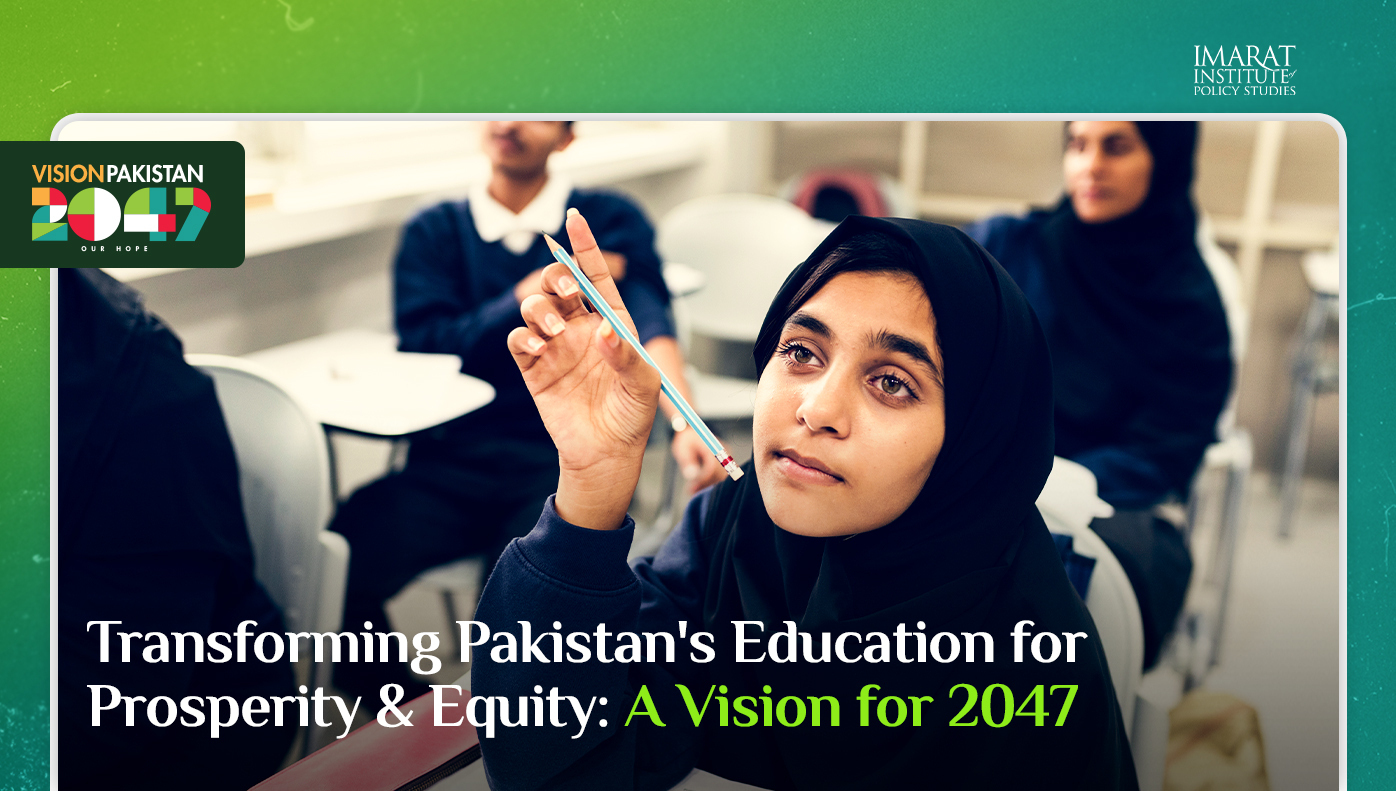
A strong education system is vital for Pakistan’s prosperity, fostering a sense of belonging and providing opportunities for all students to thrive. Education is key to elevating our nation’s status globally and unlocking the potential of our youth. Pakistan is committed to enhancing its education system to meet global standards, aiming for quality education aligned with Sustainable Development Goal 4. While progress has been made, reforms require active involvement from the private sector alongside effective policy interventions and resource allocation.
Pakistan’s youth must receive an education that not only fulfills their aspirations but also fuels the nation’s economic growth. Education plays a pivotal role in sustainable development, driving the acquisition, creation, and adaptation of new-age skills and values. To position Pakistan as a leading global economy, a high-quality education system must be developed, capable of producing a skilled workforce for the modern age. However, challenges such as capacity, scale, and quality hinder progress. Reforms are essential at both the central and provincial levels, along with policies to encourage greater involvement of private partners in the education sector, to align Pakistan’s education system with the demands of a skilled society of the future.
Pakistan’s education and training strategy must draw from past experiences and global insights to ensure quality delivery and adequate funding. Converting the demographic transition into a developmental boon requires strategic investment and incentives to cultivate a well-educated and trained workforce. Recognizing the limitations of the public sector alone, fostering robust public-private partnerships with coordinated investments and enabling policies is imperative. Strategic partnerships will see the private sector leading tertiary education and skill training, while the public sector takes charge of primary, secondary, and higher secondary education, emphasizing quality across both delivery systems.
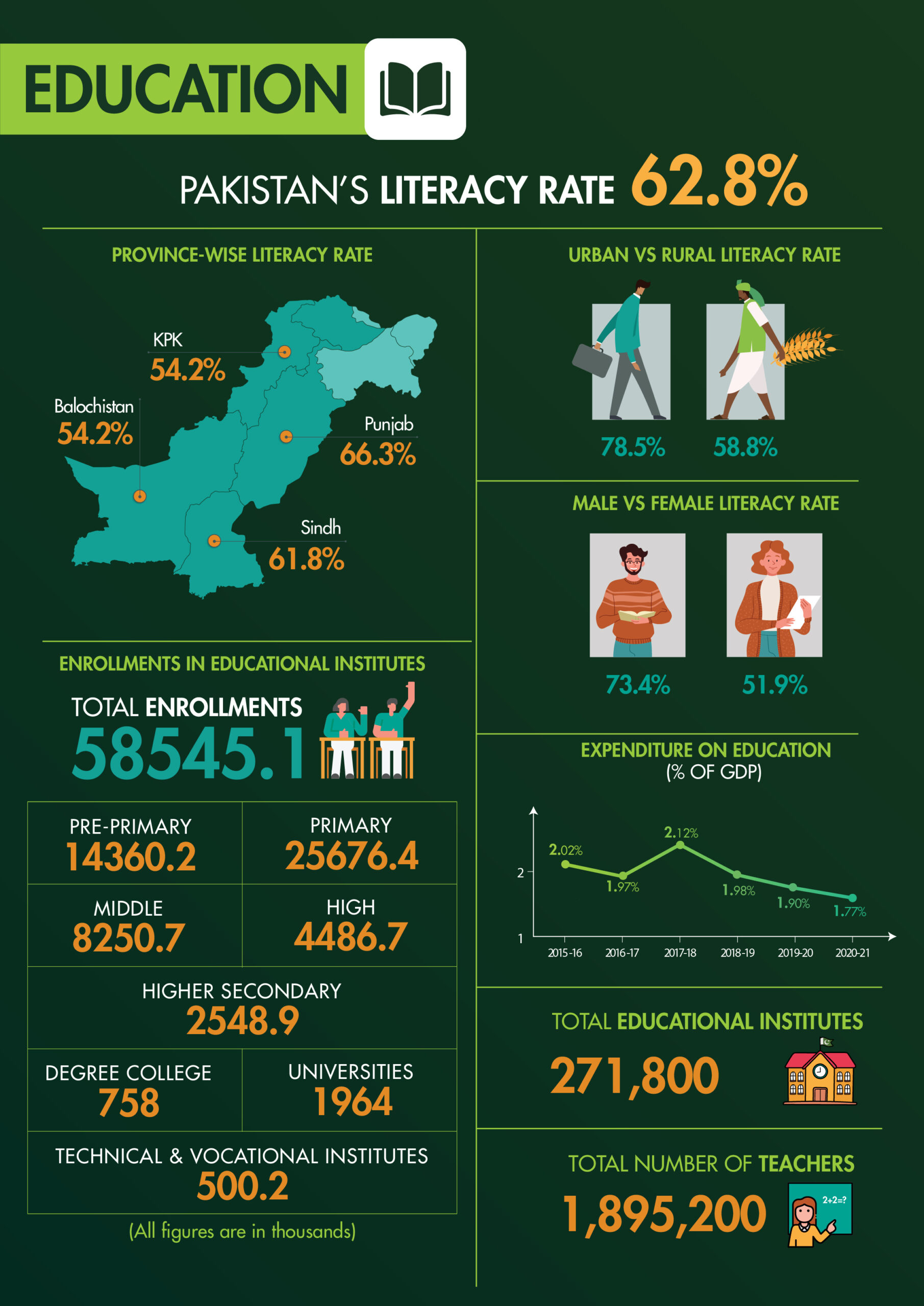
Securing the Demographic Dividend
To ensure that Pakistan’s demographic potential is converted into dividends, Pakistan must place a particular emphasis on providing free education for all students up to grade 12. Primary and secondary education must be the focus in the early years, not just enrollment. There is also a need to expand efforts in order to increase post-secondary education and to reach out to children in hard-to-reach areas such as urban slums and rural families. It will also be necessary to emphasize incentives such as stipends, free school meals, and free preventive health checks for children from poor families.
Strengthen Public-Private Partnership
Pakistan must strengthen the partnership between the public and private sectors in delivering primary and secondary education. The public sector must have the primary responsibility to ensure that each child goes through a minimum of 12 years of education. The supply of private schooling for those who can afford it must be further stimulated through policy and regulatory support. Appropriate policy measures should be taken to strengthen to reach out to children in urban slums, hard-to-reach areas and out-of-school children.
The responsibility for education beyond 12 years of schooling should primarily rest with the private sector. In recent years, there has been an increase in private investment in higher education, a sign that the private sector is capable of taking on this role. A focus must be placed on public provision of higher education in areas where private investment is lacking, on closing of the gender gap in tertiary education, and on the development of science, technology, and medicine.
Eliminate Education Wastage
In order to prevent waste of resources and provide 12 years of education for all, dropout rates in primary and secondary education must be reduced. Improvements in the quality of primary and secondary education will contribute to a reduction in dropout rates. Additionally, decentralizing education delivery and involving parents in school administration will be helpful. To the extent child marriage is responsible, the government must ensure monitoring and full implementation of anti-child marriage laws, including preventive measures such as information dissemination through campaigning and community participation and parent counseling.
Streamline and Improve the Quality of Madrasa Education
With proper accreditation, madrasa education must be incorporated into mainstream education with a curriculum that promotes science, math, English, and ICT skills. There must be a focus on improving the quality of madrasa education through the development of school facilities, the training of teaching professionals, the provision of books and supplies, and the use of ICT facilities.
Strengthen Delivery of Non-Formal Education
Pakistan must give the highest priority to the implementation of its education policy, including the elimination of adult illiteracy through the strengthening of non-formal education. In order to create scope for ICT-based continuing and lifelong learning, specific steps must be taken, including the establishment of a community-based network of learning centers; maintaining “second chance” education; enhancing opportunities for effective skill training; strengthening the delivery of all aspects of the non-formal education strategy; and establishing a board of non-formal education.
Enhance Quality of Education
Each stage of the education cycle must be stressed for sharply increasing the quality of learning, beginning with primary education, through strengthening the quality of education inputs, including physical facilities, teaching professionals, curriculum, books and supplies, and parental involvement. By adopting a programmatic approach to the expansion of early learning, early childhood learning programs must be mainstreamed throughout the country. A strong emphasis must be placed on the development of science, math, and language skills. It is imperative that ICT education is emphasized from the primary level onwards.
In order to enhance the quality and standard of higher education colleges, adequate library, laboratory, and information technology facilities must be provided, as well as appropriate teacher training. All postgraduate colleges in Pakistan should offer ICT courses. As part of the accreditation process, it is imperative that attention be paid to the quality aspects of private colleges and universities, including their physical facilities and staffing levels.
Promote Equity
It is necessary to provide need-based public scholarship programs for students who demonstrate the required competencies and meet the admission criteria at private colleges and universities in order to ensure equity. There must be an emphasis on establishing public colleges for women at the district level in order to eliminate the gender gap in higher education.
In light of the fact that women’s education positively impacts health and nutrition outcomes, this is particularly relevant. Furthermore, there is a need for many of the future jobs on the global market to be oriented towards women. In the caregiving industry, women perform better in fields such as primary education, hospitals (as nurses), old-age homes (as caregivers), childcare centers, as well as garment manufacturing and the assembly of electronics. In this context, it is important to develop a curriculum that is gender-sensitive. The goal of joining the ranks of middle-income countries cannot be achieved without allowing equal participation of women in the workforce.
Strengthen National Skills Development
Efforts to ensure 12 years of compulsory education must be coupled with initiatives to enhance the workforce’s skill profile, particularly to leverage the demographic dividend. Despite government efforts, there remains a significant gap in vocational training, particularly in the ICT sector, necessitating diversified technical and vocational education programs. Addressing gender disparities in vocational training is crucial, alongside modernizing TVET institutes to meet rural economic demands, with a focus on women’s participation. Public-private partnerships are vital for effective vocational education delivery, emphasizing on-the-job training and streamlining programs to meet market demands. Access to public grants should support demand-driven private training programs. A comprehensive financing strategy is essential to enhance education quality, ensuring every child receives 12 years of quality education by 2047, irrespective of socio-economic status, gender, religion, ethnicity, or disability.
Ensure Quality Across All Educational Institutions
To achieve this goal, every school must have qualified teachers, adequate facilities, and strong management, with institutions developing quality assurance plans for autonomy and accountability. Quality standards in colleges and universities require enhancement, focusing on analytical and creative skills rather than rote memorization to prepare for the competitive workplace by 2047. Establishing a globally recognized certification system and integrating hands-on experience into education are crucial. Universities should offer graduate programs by 2047, emphasizing research relevant to Pakistan. To ensure an internationally competitive education system, Pakistan must prioritize education over politics, leveraging digital technologies for widespread access. Internet connectivity in all institutions, particularly rural areas, and gender equality in education access are vital targets for 2047.
Remove Segmentation in the Education System
To prevent division based on education and enhance its quality, Pakistan needs to swiftly implement an integrated education system, ensuring all students acquire core knowledge and competencies at the primary level. This unified system, implemented well before 2047, would establish common curricular content and objectives while allowing for additional learning options. Students would have a wider array of secondary education choices, with specialization occurring at the tertiary level. Measures to promote bilingualism in Urdu and English and to improve primary education’s focus on literacy, numeracy, and basic science are crucial, particularly given the prevalent two-shift schedule in over 90% of primary schools. Establishing minimum facilities standards for all schools, regardless of funding source, is essential for the successful implementation of this integrated system.
A Skilled and Creative Workforce
We can expect large businesses to repay their local communities by establishing educational institutions of the highest caliber across Pakistan. It would be a win-win situation for both corporations and local communities. It is possible for small and medium-sized businesses to participate in the initiative. Acts of social responsibility can generate far more goodwill for businesses than the direct financial contributions they make. Appropriate tax incentives will be considered for contributions made by private companies and individuals in support of education. For Pakistan, no other sector of national development can claim a higher priority than education.
Adequate resources must be made available for the essential quality inputs for the education system, such as qualified and motivated teachers, learning materials and aids, and physical facilities. Criteria for optimal allocation and utilization of resources must be developed and applied in sub-sectors and programs of education and individual institutions. Public subvention and incentives to educational institutions must be linked to commitment and fulfillment of agreed performance criteria and targets; greater autonomy and control of resources will be offered to institutions that prove their capability to use resources effectively.
Conclusion
In conclusion, the outlined vision for transforming Pakistan’s education system by 2047 represents a comprehensive strategy aimed at fostering prosperity and equity. By addressing key challenges such as strengthening public-private partnerships, eliminating education wastage, and promoting equity, this vision strives to ensure access to quality education for all, regardless of background. Emphasizing the importance of a unified education system and a skilled workforce, this vision sets forth a path towards national development and cohesion. Achieving these ambitious goals will require collaborative efforts and sustained investment from all stakeholders, but the potential benefits for Pakistan’s future are immense, promising a society where every individual can thrive and contribute to the nation’s growth.

Leave a Reply