

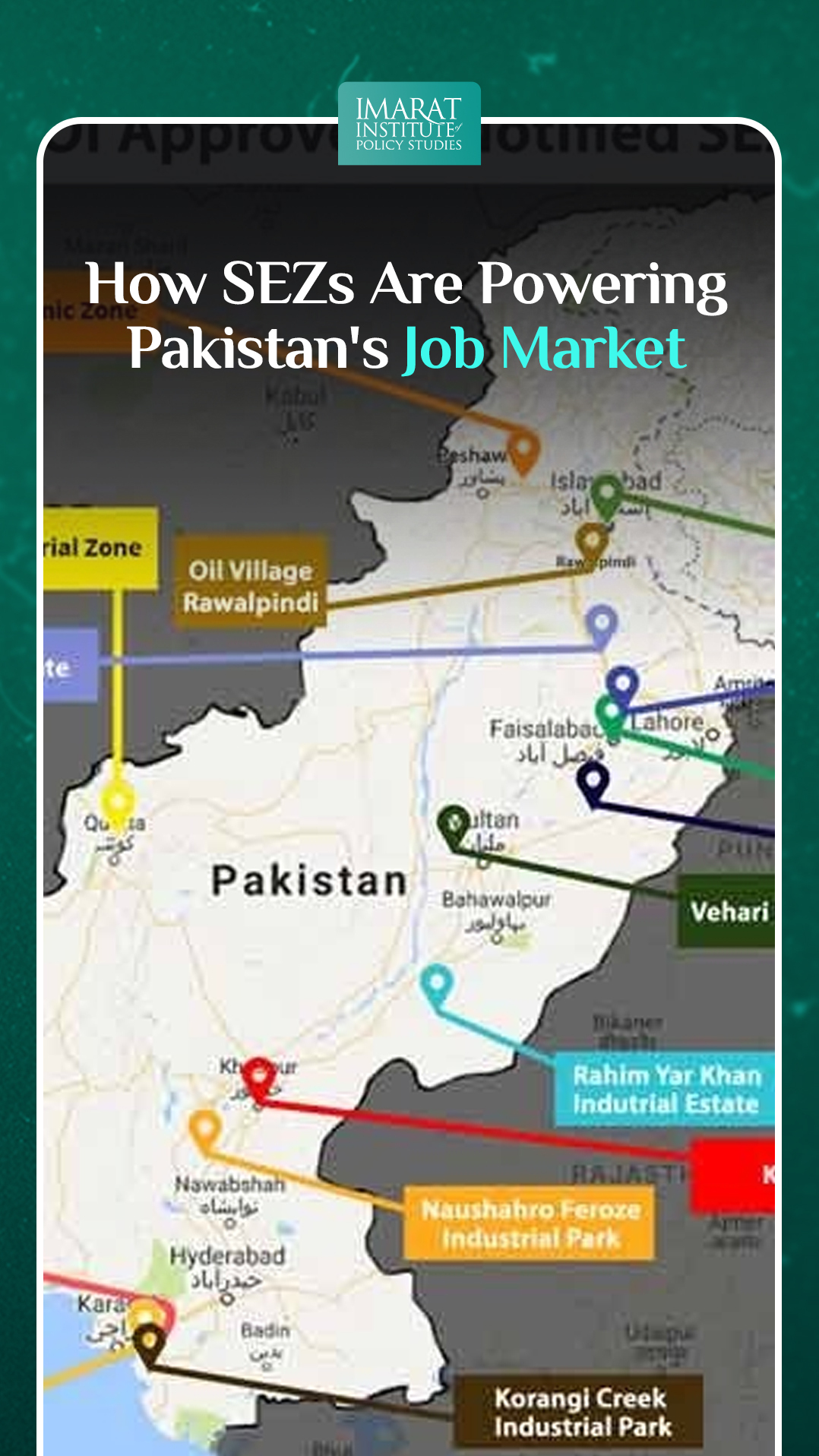
In Pakistan, Special Economic Zones (SEZs) have emerged as pivotal drivers of economic growth, industrialization, and job creation. These zones, designated for specific economic activities and offering favorable policies and incentives, play a crucial role in attracting investment, stimulating exports, and generating employment opportunities. In this blog, we delve into the transformative impact of SEZs on Pakistan’s job market, exploring how these zones are powering economic growth and fostering employment generation across the country.
Stimulating Investment and Industrialization
SEZs serve as magnets for domestic and foreign investment, attracting businesses by offering a conducive environment for manufacturing, trade, and commerce. The availability of infrastructure, streamlined regulations, and fiscal incentives within SEZs incentivize companies to set up operations, leading to the establishment of new industries and the expansion of existing ones. This influx of investment not only creates job opportunities directly within SEZs but also generates employment indirectly through backward and forward linkages with suppliers, service providers, and supporting industries.
Driving Employment Opportunities
One of the most significant contributions of SEZs to Pakistan’s economy is their role in generating employment opportunities. With their focus on export-oriented industries and manufacturing activities, SEZs provide a vast array of jobs across various sectors, including textiles, automobiles, electronics, and food processing. These zones offer employment opportunities for a diverse range of skill levels, from entry-level workers in production facilities to managerial and technical positions in research and development centers. Additionally, SEZs often prioritize hiring from local communities, providing a pathway to socioeconomic advancement for nearby residents.
Fostering Skill Development and Capacity Building
SEZs not only create jobs but also serve as platforms for skill development and capacity building. Many SEZs in Pakistan collaborate with educational institutions, vocational training centers, and industry associations to provide specialized training programs tailored to the needs of employers within the zones. These programs equip workers with the skills and knowledge required to excel in their roles, enhancing productivity, efficiency, and competitiveness. Furthermore, SEZs offer opportunities for career advancement and professional growth, enabling workers to acquire new skills and advance their careers within the dynamic environment of industrial zones.
Promoting Inclusive Growth and Regional Development
SEZs play a crucial role in promoting inclusive growth and regional development by extending economic opportunities to underserved areas and marginalized communities. By strategically locating SEZs in different regions of the country, policymakers aim to decentralize economic activity, reduce regional disparities, and create employment opportunities in areas with high levels of unemployment and poverty. Additionally, SEZs often incorporate social infrastructure projects, such as schools, hospitals, and community centers, further enhancing the quality of life for local residents and fostering social inclusion.
Strengthening Export Competitiveness
A significant aspect of SEZs’ contribution to Pakistan’s job market lies in their role in strengthening the country’s export competitiveness. By focusing on export-oriented industries, SEZs help Pakistani businesses tap into international markets, diversify their product offerings, and enhance their global competitiveness. The job opportunities created within SEZs are often directly linked to export-driven activities, such as manufacturing goods for international markets, processing raw materials for export, or providing services to foreign clients. As SEZs continue to attract investment and facilitate exports, they contribute to job creation not only within the zones but also across the broader supply chain, including transportation, logistics, and distribution.
Encouraging Entrepreneurship and Innovation
SEZs serve as incubators for entrepreneurship and innovation, providing a fertile ground for startups, SMEs, and technology-driven ventures to flourish. The supportive ecosystem within SEZs, comprising infrastructure, access to markets, and regulatory incentives, encourages aspiring entrepreneurs to establish businesses and pursue innovative ideas. These entrepreneurial ventures not only create employment opportunities but also drive economic dynamism and diversification. Moreover, SEZs often host research and development centers, technology parks, and innovation hubs, where collaboration between industry, academia, and government fosters innovation, technology transfer, and knowledge sharing. By nurturing a culture of entrepreneurship and innovation, SEZs contribute to the creation of high-value jobs and the development of a knowledge-based economy in Pakistan.
Building a Sustainable Future
In addition to their immediate impact on job creation and economic growth, SEZs play a crucial role in building a sustainable future for Pakistan. Many SEZs prioritize environmental sustainability and social responsibility, incorporating green building practices, renewable energy solutions, and waste management systems into their operations. By promoting sustainable development principles, SEZs not only mitigate their environmental footprint but also contribute to the well-being of local communities and the preservation of natural resources. Furthermore, SEZs often prioritize social development initiatives, such as education and healthcare programs, to enhance the quality of life for workers and their families. By integrating economic, environmental, and social considerations into their operations, SEZs contribute to the long-term prosperity and resilience of Pakistan’s economy and society.
Conclusion
In conclusion, Special Economic Zones (SEZs) are powerful engines driving Pakistan’s job market, spurring economic growth, and fostering employment generation across the country. Through their ability to stimulate investment, create job opportunities, foster skill development, and promote inclusive growth, SEZs play a vital role in advancing Pakistan’s socioeconomic development agenda. As Pakistan continues to leverage the potential of SEZs to drive economic transformation and create sustainable livelihoods, these zones will remain instrumental in powering the country’s job market and shaping its future prosperity.
This article is written by Radma Nouman. Radma is a research analyst at the Iqbal Institute of Policy Studies (IIPS).

Leave a Reply