

Nestled along the banks of the Chenab River in the heart of Pakistan, Multan is a city that echoes with the whispers of its rich cultural heritage. Beyond the iconic shrines and historical monuments, Multan’s markets stand as vibrant tapestries, intricately weaving together threads of the city’s past and its unwavering commitment to handicraft heritage. In this immersive journey, we delve into the details of Multan’s markets, where every alleyway and market stall unfolds stories of artistry, tradition, and the enduring spirit of a city deeply rooted in history.
Multan’s Rich Tapestry: A Glimpse into the City’s Heritage
Multan, often referred to as the “City of Saints” and the “Mango City,” offers a diverse cultural palette shaped by centuries of influences. The markets, more than commercial hubs, serve as dynamic spaces where the essence of Multan’s heritage comes alive. As we navigate through the labyrinthine marketplaces, we find ourselves immersed in a living history, a vibrant fusion of craftsmanship and commerce that tells the story of a city shaped by the hands of artisans and the passage of time.
Anarkali Bazaar: Unraveling Multan’s Handicraft Haven
Our exploration commences at the historic Anarkali Bazaar, a bustling market named after the legendary courtesan of the Mughal era. This market encapsulates the very essence of Multan’s handicraft heritage, presenting an eclectic array of goods that span the spectrum from age-old artifacts to contemporary creations. The air is thick with the heady fragrance of spices, while the kaleidoscope of vibrant colors from fabrics and pottery creates a mesmerizing ambiance, inviting exploration and discovery.
Blue Pottery: The Art of Multan’s Artisans
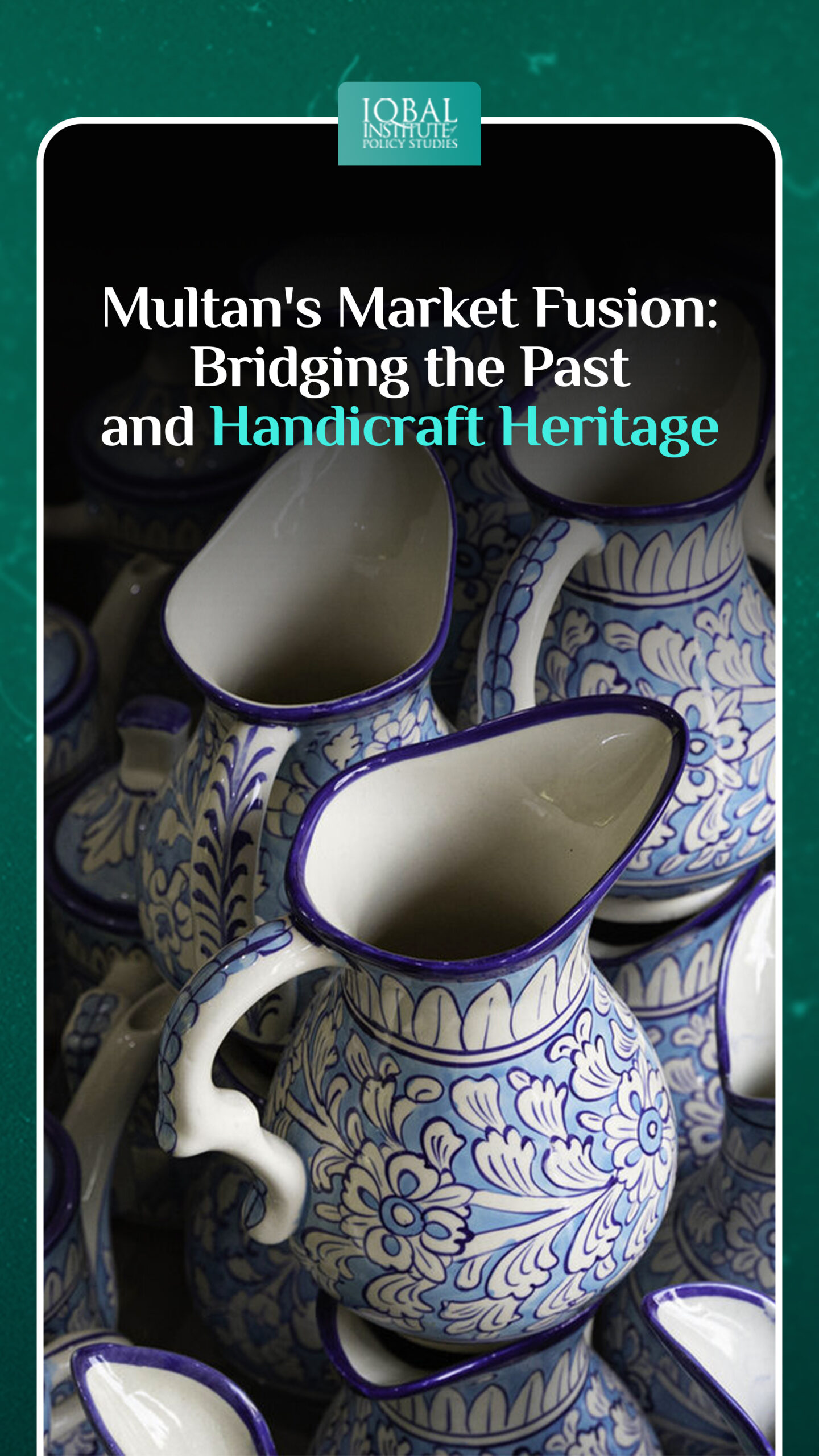
One cannot speak of Multan’s handicraft heritage without delving into the captivating world of blue pottery. Passed down through generations, blue pottery in Multan is not merely an art form; it is a testament to the city’s artistic prowess and cultural identity. As we venture into the studios of local artisans, the meticulous process of crafting intricate designs on tiles and pottery unfolds before our eyes. The azure hues narrate tales of a heritage that transcends time, where each piece is not just a work of art but a cultural artifact carrying the echoes of Multan’s storied past.
Suzani Embroidery: Threads of Multan’s Tradition
Our journey through Multan’s markets reveals the vibrant canvas of Suzani embroidery. The stalls, adorned with dazzling textiles, offer a glimpse into the meticulous craftsmanship that defines Multan’s textile heritage. Suzani embroidery, characterized by bold patterns and vivid colors, serves as a living testament to the skillful hands that have perfected this art over generations. From intricately embroidered shawls to stunning bedspreads, each piece is a story woven with threads, reflecting the cultural richness and artistic expression of Multan.
The Multani Pagri: A Symbol of Identity
No exploration of Multan’s handicraft heritage is complete without encountering the iconic Multani Pagri. Worn with pride by locals, this traditional turban is not a mere accessory; it is a symbol of Multan’s cultural identity. The market stalls are adorned with a myriad of colorful pagris, each representing a unique story, a connection to the city’s storied past, and a symbol of cultural pride that transcends generations. Through these intricately wrapped turbans, Multan’s heritage is not only preserved but proudly displayed as a living legacy.
Street Food Delights: A Culinary Odyssey
Beyond the handicraft treasures, Multan’s markets offer a sensory odyssey through its gastronomic delights. The famed Sohan Halwa, with its sweet aroma and rich texture, beckons connoisseurs of traditional sweets. Local chaat stalls add a savory dimension to the culinary journey, as Multan’s markets become not just a feast for the eyes but a celebration of its diverse culinary heritage. The bustling food stalls, with their aromatic offerings, become integral chapters in Multan’s narrative, enticing visitors to savor the flavors that have been passed down through generations.
Interactive Workshops: Keeping Tradition Alive
Multan’s commitment to preserving its handicraft heritage extends beyond the marketplace. Many markets host interactive workshops, inviting visitors to engage directly with traditional crafts. These hands-on experiences foster a deeper appreciation for the skill and effort embedded in creating these timeless pieces. Participants, under the guidance of skilled artisans, learn the intricacies of blue pottery, the art of Suzani embroidery, and the fine nuances of crafting the Multani Pagri. These workshops not only serve as educational experiences but as a vital link between the past and the present, ensuring that the flame of Multan’s artisanal legacy continues to burn brightly.
Conclusion
In concluding our detailed journey through Multan’s markets, it becomes evident that these spaces are not merely economic centers—they are living museums, custodians of a rich legacy. The fusion of the past and handicraft heritage creates a unique tapestry that not only tells the story of Multan but invites visitors to become active participants in its ongoing narrative. With every intricate piece purchased, every story shared with artisans, and every exploration of Multan’s markets, we contribute to the preservation of a heritage that transcends time. Through the details of blue pottery, the vibrant threads of Suzani embroidery, the symbolic Multani Pagri, and the flavors of traditional delicacies, Multan’s markets serve as portals into a bygone era, fostering a deep connection between the present and the rich tapestry of Multan’s past.
This article is written by Radma Nouman. Radma is a research analyst at the Iqbal Institute of Policy Studies (IIPS).

Leave a Reply